
The Short Version
If your garage door closes flush, seals out water, and moves smoothly at 40 degrees the same way it does at 90, you're ready for winter. The exceptions are the parts that quietly degrade all year and only show their failure once the first real storm or cold snap hits: worn weatherstripping, rusted hardware, foggy photo-eye sensors, and springs that have slowly lost tension since summer.
Rain Is the Real Test
Central Valley winters don't bring snow, but they do bring sustained rain after months of dry weather, and that combination is hard on a garage. Dust and pollen that settled into the door's bottom seal over summer can crack or stiffen the rubber, so water finds its way in instead of running off. Walk around the door from outside and look for:
- Gaps or tears in the bottom weatherstrip where daylight shows through
- Dried-out or pulled-away side and top seals (weatherstrip around the frame)
- Water stains or damp drywall on the inside near the door frame from last year's storms
Replacing a bottom seal is a straightforward fix and one of the better dollars you'll spend before the rainy season, since it's the main barrier between a wet driveway and a dry garage floor.
Check the Slab Slope and Drain Path
If your driveway or garage apron doesn't slope away from the door, pooling water can seep under even a good seal during a heavy storm. You can't regrade a driveway in an afternoon, but you can clear leaves, dust buildup, and debris from the threshold so water has somewhere to go instead of sitting against the door.
Hardware After a Dry Summer
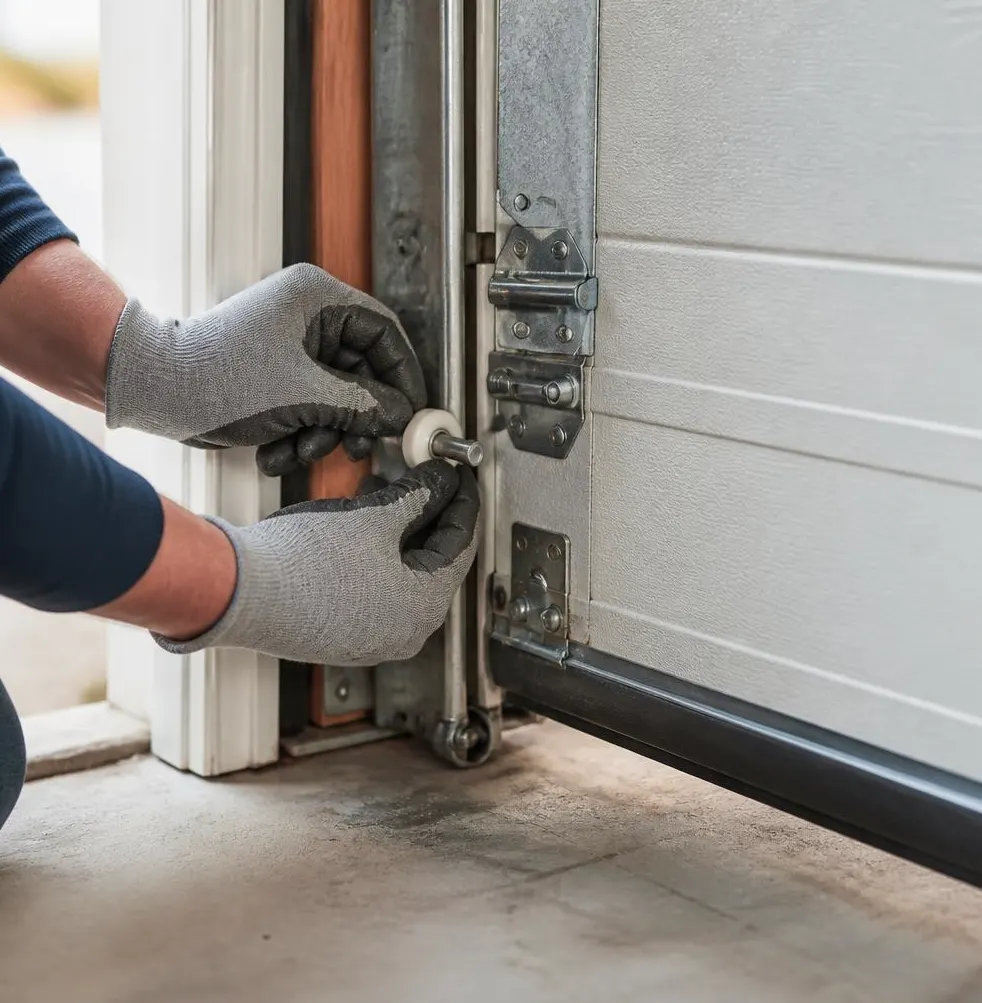
Dust-season grit mixes with any moisture from morning dew or early rain and can start fine surface rust on springs, hinges, and tracks, especially on older doors that haven't had a full inspection in a while. Surface rust on its own isn't an emergency, but it's a sign the hardware has been under more stress and less lubrication than it should. If you've already done a seasonal lubrication pass, this is a good time to also check for:
- Rust forming at the ends of the torsion spring coils
- Hinges with visible pitting or a rough, grinding motion
- Track brackets that have loosened as the door has worked through a full year of temperature swings
Tighten what's loose and note anything that looks heavily corroded rather than just dusty; that's a hardware conversation, not a lubrication one.
Cold Mornings Change How Springs Behave
Torsion springs lose a small amount of tension as temperatures drop, and in a Central Valley winter you'll get real swings between chilly mornings and warmer afternoons. A door that's been balanced for 90-degree summer days can start to feel heavier or close with a thud once the mornings turn cold. Do a quick balance test: disconnect the opener, lift the door halfway by hand, and let go. It should stay roughly in place. If it drops or shoots up, the spring tension needs adjustment. This is not a DIY repair — torsion springs are under enough force to cause serious injury — but it's worth knowing the symptom so you can get it corrected before a cold morning turns into a door that won't open at all.
Tule Fog and Photo-Eye Sensors
Central Valley fog season brings thick, low-visibility mornings, and that same moisture can fog up or coat the small photo-eye sensors near the bottom of the door track. If your opener reverses the door unexpectedly, refuses to close, or blinks an error light, wipe both sensor lenses with a soft, dry cloth and make sure they're still aligned facing each other. Condensation and dust are common, harmless causes this time of year, but a sensor that's knocked out of alignment or has a damaged wire needs an actual fix, not just a wipe-down.
Plan for Power Outages
Winter storms occasionally knock out power in the Central Valley, and a garage door opener with no backup battery means no automatic opening or closing until power returns. If your opener doesn't already have a battery backup, consider adding one, especially if the garage is your main entry point. In the meantime, make sure everyone in the house knows how to use the manual release handle to open the door by hand if needed.
A Few Small Habits Worth Starting Now
- Keep a flashlight or headlamp near the garage entrance for dark, rainy evenings
- Clear leaves and debris from the track and threshold after storms, not just before them
- Listen for new noises — grinding, popping, or scraping — since cold temperatures tend to make existing wear more noticeable
When to Call Fresno Garage Door Pro
If your balance test shows a heavy or uneven door, if the bottom seal is too far gone to simply swipe clean, or if the opener is misbehaving even after cleaning the sensors, it's time to call in a technician rather than keep adjusting things yourself. We handle spring replacement for doors that have lost tension or developed rust damage over the year, and we also do full garage door maintenance visits that cover weatherstripping, hardware, sensor alignment, and opener function in one trip — a practical way to head into winter knowing the whole system was checked, not just the parts you could see from the driveway.
If you're noticing any of these signs before the next storm rolls through, call Fresno Garage Door Pro today and get your garage door ready for whatever this Central Valley winter brings.