
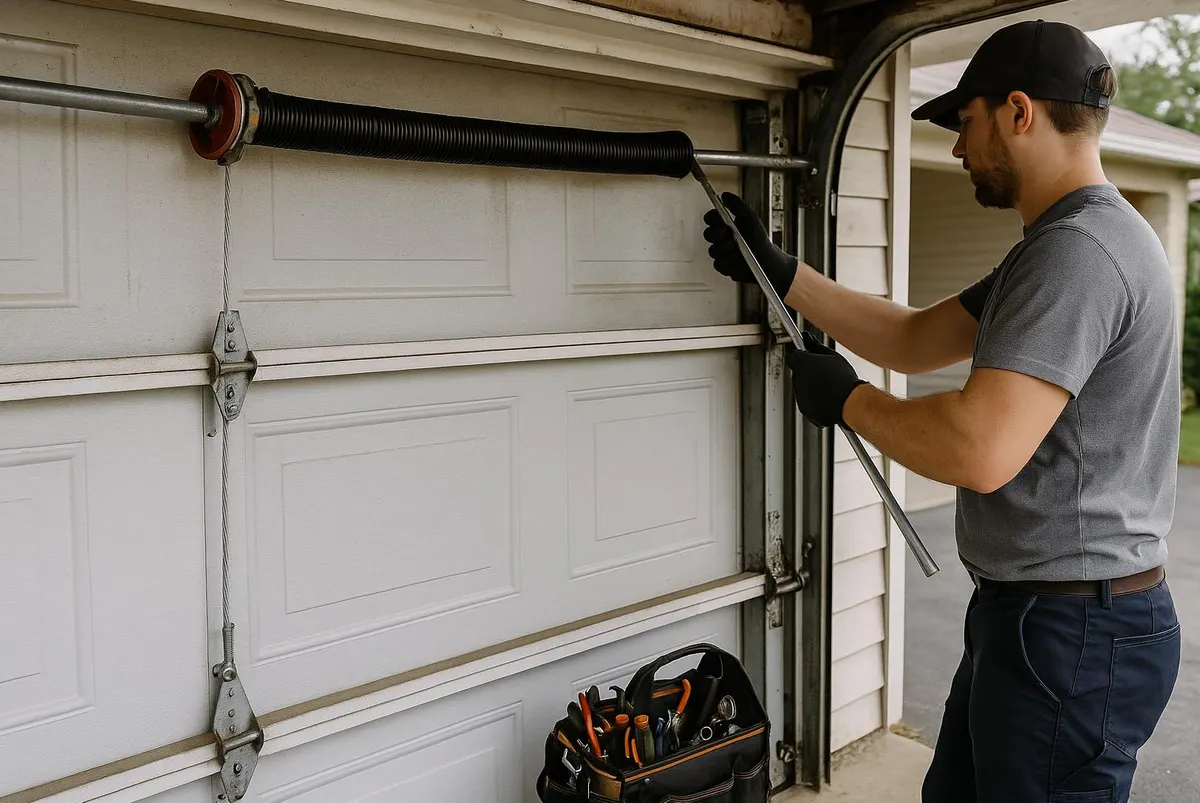
What a Technician Sees on a Typical Lubrication Call
Most service calls about a noisy or sticky garage door in this area follow the same pattern. A homeowner grabs a can of WD-40 from the garage shelf, sprays the hinges and track, and the door is quiet for a week or two. Then it comes back louder than before. By the time a technician opens the panel, the rollers and hinge pins are caked in a gritty paste made of old lubricant and the fine dust that blows through this part of the Central Valley for months at a time. During wildfire smoke season, that film gets even thicker, since ash and soot stick to any oily surface. The fix usually isn't more lubricant — it's cleaning off the wrong product and starting over with the right one, applied correctly.
Tools and Supplies Needed
- Lithium-based grease or a silicone-based garage door lubricant (sold specifically for garage door hardware)
- Soft shop rags or paper towels
- A stiff-bristle brush (an old toothbrush works for hinges and rollers)
- Mild degreaser or dish soap and water, for cleanup only
- Work gloves
- A step stool, if your door height requires one
- A flashlight to check tracks and springs for wear before you lubricate over them
Step-by-Step: How to Lubricate Your Garage Door
- Disconnect the opener and close the door manually. Pull the release cord so you can move the door by hand. This keeps the opener from engaging while you're working near moving parts.
- Wipe down every moving part before you spray anything. Use a dry rag on the hinges, rollers, track, and springs to knock off loose dust. In dry months, this step matters more than people expect — lubricating over a layer of dust just creates the gritty buildup technicians scrape off later.
- Clean off any old, gummed-up lubricant. If you see dark, sticky residue on the hinges or rollers, dampen a rag with a little mild degreaser and wipe it away. Let the parts dry fully before moving on.
- Lubricate the hinges. Apply a small amount of lithium grease or silicone spray directly to the pivot points where the hinges bend. A little goes a long way — you want a thin, even coat, not a visible pool.
- Lubricate the rollers, but only at the bearings. If your door has metal rollers with ball bearings, apply lubricant at the stem where it meets the bracket. If you have nylon rollers, skip heavy grease on the roller wheel itself; a light silicone spray is enough, since too much grease attracts more dust and grime on nylon.
- Apply lubricant to the top of the track where the rollers ride, not inside the track channel. Never spray lubricant into the track groove itself — it collects dust and can actually make rollers slip rather than roll smoothly.
- Lubricate the lock mechanism, if your door has one. A short burst of silicone spray into the lock cylinder keeps it working smoothly, which matters more heading into winter when rain can cause metal parts to stiffen or swell slightly.
- Run the door up and down a few times by hand. This works the lubricant into the moving parts and lets you listen for grinding, squeaking, or uneven movement that wasn't there before.
- Reconnect the opener and test a full cycle. Watch the door travel from open to closed. It should move smoothly without jerking, hesitating, or sagging on one side.
Products to Use
Stick with lithium-based grease or a silicone-based spray made specifically for garage doors. Both hold up well in heat, resist washing off in winter rain, and don't gum up with dust the way heavier all-purpose oils do.
Products to Avoid
Skip WD-40 and similar penetrating oils for ongoing lubrication. WD-40 is a solvent and light degreaser first — it displaces moisture and loosens rust, but it evaporates quickly and doesn't leave enough film to protect metal parts long-term. It also tends to attract dust rather than resist it, which is a bigger problem here given how much airborne dust and ash settle on exposed hardware for much of the year. Avoid thick automotive grease as well; it's too heavy for garage door hinges and rollers and will gum up faster in dusty conditions.
What's Safe for a Homeowner vs. What Needs a Technician
Wiping down parts, applying grease or silicone spray to hinges and rollers, and lubricating the lock are all reasonable DIY tasks with the opener disconnected. What's not a DIY job: touching the torsion springs. Springs are under high tension and store enough energy to cause serious injury if they let go while you're working near them. The same goes for any cables, the tension pulleys, or hardware tied to an earthquake retrofit bracket — these should only be inspected, lubricated, or adjusted by a trained technician. If you notice a gap in a cable, a stretched or rusted spring coil, or hardware that looks like it's pulling away from the wall or header, stop and call for service rather than lubricating around the problem.
When to Call Fresno Garage Door Pro
If lubrication doesn't quiet the door, if one side seems to drop faster than the other, or if you spot rust or wear on the springs or cables, it's time to call in a technician rather than keep troubleshooting on your own. Our Garage Door Maintenance visits include a full inspection of springs, cables, rollers, and hardware along with proper lubrication, so you're not guessing which parts are safe to touch. If a spring has already failed or looks close to it, our Spring Replacement service handles that safely with the right tools and tensioning equipment.
If your garage door in Fresno, CA is squeaking, sticking, or just overdue for a checkup, call Fresno Garage Door Pro and we'll get it running quietly again.